
Recovery after dental implants can feel daunting, but knowing what to expect makes the process easier. This guide explains typical timelines, immediate care, pain control, diet and hygiene tips, warning signs, and when to call your dentist. If you’re having recovery after dental implants in New York, this overview will help you plan the first days, weeks, and months for the best outcome.
What To Expect Immediately After Surgery (First 24–72 Hours)
Expect some bleeding, swelling, bruising, and mild discomfort during the first 24–72 hours. Bite gently on gauze to control bleeding and change it as directed. Apply ice packs for 20 minutes on, 20 minutes off for the first 48 hours to limit swelling. Keep your head elevated when resting, avoid spitting or using a straw, and follow prescribed pain and antibiotic instructions from your dentist.
Typical Timeline For Recovery After Dental Implants
First week
Bleeding should slow within 24 hours and largely stop by day two. Swelling often peaks day 2–3 and then improves. Minor bruising and soreness are normal. Sutures may be present; some dissolve on their own. Rest and soft foods are key this week.
Weeks 2–6
Soft tissue heals steadily. Any removable temporary restorations should feel more comfortable as gums settle. You can begin to reintroduce firmer foods slowly, avoiding hard, chewy, or crunchy items near the implant site. Follow-up visits will check healing and remove non-dissolving sutures if needed.
Months 3–6 (Osseointegration)
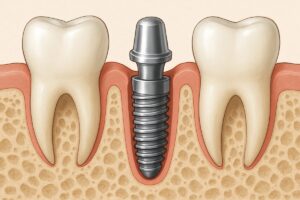
The implant bonds with bone in a process called osseointegration. You may feel little to no discomfort during this phase, but the implant is still integrating. Avoid excessive force on the area until your dentist clears you for final restorations.
Pain Control, Medications, And Supplements
Typical pain control includes acetaminophen and, if prescribed, short courses of opioids for severe pain. NSAIDs like ibuprofen are often effective but discuss use with your dentist if advised to avoid them. Antibiotics may be prescribed to prevent infection. Some practices use PRGF or other biologics to speed healing and reduce inflammation—ask your provider if this was part of your treatment.
Diet, Oral Hygiene, And Daily Care During Recovery
Start with a soft diet: yogurt, smoothies (no straw), mashed potatoes, scrambled eggs. Gradually add firmer foods after two weeks as comfort allows. Brush gently with a soft toothbrush and avoid the surgical site for the first few days; rinse with salt water or a prescribed mouthwash. Resume flossing around other teeth once swelling subsides and your dentist approves use near the implant.
Activity, Work, And Exercise Guidelines
Most patients return to desk work within 48–72 hours. Avoid heavy lifting or strenuous cardio for at least one week to reduce bleeding and swelling. When you resume exercise, increase intensity slowly and stop if you notice increased pain or bleeding.
Signs Of Complications — When To Call Your Dentist
Contact your dentist right away for uncontrolled bleeding, severe pain not eased by medications, fever over 101°F, pus or foul drainage, a loose implant, or new numbness. For mild persistent soreness or swelling, call during office hours for advice and possible follow-up.
Ways To Support Faster, Safer Healing
Quit smoking, eat a balanced diet rich in protein and vitamins, stay hydrated, and get plenty of sleep. Modern techniques—computer-guided implant placement, S.M.A.R.T. grafting, PIEZOSURGERY, and PRGF—can reduce trauma and speed recovery when used by experienced teams.
Common Patient Questions About Recovery After Dental Implants
Q: How long until I can eat normally?
A: Many resume most foods by 4–6 weeks; final clearance depends on healing and your dentist’s green light.
Q: Will it hurt more than a tooth extraction?
A: Discomfort is similar for single implants; complexity and grafting can increase soreness.
Q: When will my final teeth go on?
A: Final restorations are typically placed after osseointegration, often 3–6 months, or sooner with immediate protocols.
About Advanced Implant Dentistry & Oral Restoration
Advanced Implant Dentistry & Oral Restoration serves the New York area with decades of implant expertise. Dr. Michael Klein and Dr. Allon Waltuch lead a team using computer-guided surgery, PRGF, S.M.A.R.T. grafting, and an in-house lab to minimize recovery time and improve outcomes. Their fully digital workflow and same-day teeth options help patients heal more comfortably and predictably.
If you’re planning implants or have concerns about recovery after dental implants in New York, book a consultation to review your plan and post-op care. Early guidance and modern techniques can make your recovery safer, faster, and more comfortable.