
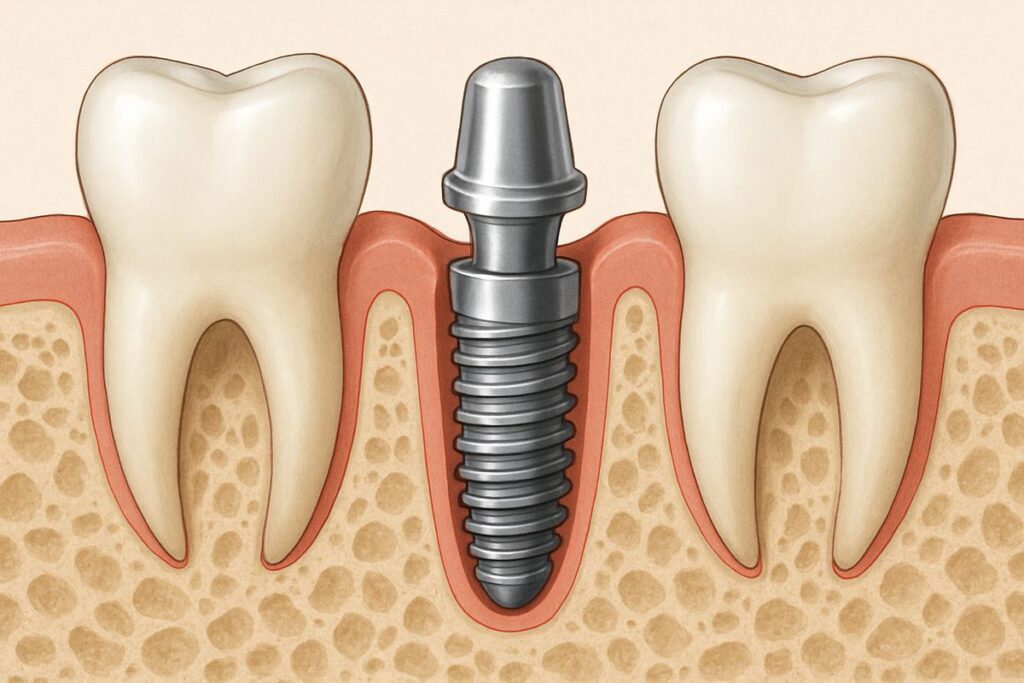
A dental extraction implant combines tooth removal with immediate implant placement to restore form and function in a single treatment plan. For many patients, replacing a failing tooth at the time of extraction speeds healing, maintains natural gum and bone contours, and can lead to a faster, more comfortable path to a finished smile. This approach is often chosen when infection, trauma, or a non-restorable tooth makes replacement the best option.
What Is an Extraction Dental Implant?
An extraction dental implant is the placement of a dental implant immediately after a tooth is removed. Unlike delayed implants, which wait months for healing, immediate placement uses the existing socket to position the implant. Clinicians recommend this when infection control is satisfactory, there is enough bone to stabilize the implant, and the soft tissue can be managed to support healing. When bone loss or active infection is significant, staged treatment with grafting or delayed placement may be safer.
Top Benefits of Combining Extraction and Implant
Faster timeline to a new smile
By placing the implant at the time of extraction, total treatment time can be shorter. Patients may avoid a separate surgery, and provisional restorations can often be delivered the same day or soon after, so you leave with functional teeth.
Preserves bone and soft tissue
Immediate placement helps maintain the jawbone’s shape and gum contours because the implant occupies the socket and supports surrounding tissues. This often results in a more natural cosmetic outcome and less need for extensive grafting later.
Fewer appointments and less overall trauma
Combining steps reduces the number of surgical events, lowering anesthesia episodes and shortening recovery overall. For many patients, this translates to less chair time, less swelling, and a quicker return to normal activities.
Who’s a Good Candidate for an Extraction Dental Implant?
Good candidates are in overall good health, have controlled chronic conditions, and show no active, uncontrolled infection at the extraction site. Adequate bone volume and healthy soft tissue are important; smokers or those with poorly controlled diabetes may need additional evaluation. When bone is lacking, techniques like bone grafting or S.M.A.R.T.™ grafting can be performed at the same time or beforehand to improve stability.
What to Expect During the Procedure
Consultation and digital planning
Care begins with a detailed exam, including CBCT imaging and intraoral scans. Digital planning maps the implant position relative to bone and adjacent teeth to ensure ideal placement and prosthetic outcomes.
Day of surgery
The tooth is gently extracted, the sockets cleaned, and the implant placed—often with a surgical guide for accuracy. When feasible, a temporary crown or bridge can be attached to maintain appearance and function while healing occurs.
Possible adjuncts
Surgeons may use bone grafts, PRGF (plasma-rich growth factors), or soft-tissue procedures to enhance healing and long-term gum stability.
Recovery, Care, and Long-Term Success
Expect mild to moderate soreness for a few days, which can be managed with prescribed or over-the-counter pain meds. Follow a soft diet, keep the area clean with gentle rinses, and avoid smoking. Osseointegration typically takes several months before final restoration; good oral hygiene and regular checkups are key to long-term success.
Costs, Insurance, and Financing Basics
Costs depend on the number of implants, any grafting, the type of restorations, and lab work. Insurance coverage varies widely. Ask the practice about in-house financing, third-party plans, or staged payment options to make care more affordable.
Why Choose Advanced Implant Dentistry & Oral Restoration
Advanced Implant Dentistry & Oral Restoration offers decades of implant experience, computer-guided surgery, an in-house digital lab, and same-day teeth protocols. Their team uses 3D imaging, guided planning, and S.M.A.R.T.™ grafting to deliver predictable, minimally invasive care.
Next Steps / Call to Action
If you think a dental implant extraction might be right for you, book a consultation. The practice evaluates cases with digital scans, creates a personalized plan, and explains options so you can choose the path to a stable, natural-looking smile.