Many people who type "dental har" into a search bar are trying to describe a serious full-mouth problem: heavy at-risk restorations, failing teeth across an arch, or the need for a full-arch replacement. They're asking whether dental implants can fix widespread dental breakdown. This article explains what people likely mean by "dental har," why implants are often suggested, what causes these situations, the pros and cons of implant treatment, and how to prepare for a full-arch implant evaluation.
What Does "Dental HAR" Mean?
The phrase "dental har" is not a standard dental term, but search intent usually points to full-arch issues. People may mean a full-arch restoration, hybrid prosthesis, or a situation where many teeth are at high risk of failing. Misunderstandings are common: some expect a single quick fix, while others imagine removable dentures only. Dental implants come up because they offer a fixed, long-term way to replace multiple failing teeth and support durable prosthetics.
Common Causes That Lead To Dental HAR Situations
Tooth decay and failed restorations
Repeated decay, large fillings, or crowns that keep breaking can leave teeth unsalvageable. When many teeth have recurrent problems, the whole arch becomes unstable and costly to maintain. At this point, replacing teeth may be preferable to continuing repairs.
Periodontal (gum) disease
Advanced gum disease destroys the bone that supports teeth. As bone is lost, teeth loosen, shift, and eventually fail. Periodontal disease is a leading cause of full-arch tooth loss and often prompts discussions about implant-supported options to restore function and prevent further bone loss.
Trauma and congenital issues
Accidents, congenital missing teeth, or lifelong wear can also create widespread dental problems. In these cases, planning for a stable, esthetic full-arch solution is often needed to restore chewing, speech, and appearance.
Are Dental Implants The Right Solution For Dental HAR?
Types of implant solutions (single, multiple, full-arch)
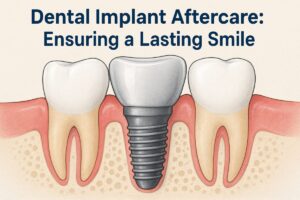
Implants can replace a single tooth, support multi-tooth bridges, or anchor full-arch prostheses. Full-arch options include All-on-4, Teeth-in-a-Day, and custom implant-supported bridges. Choice depends on how many teeth are affected, bone quality, and patient goals.
Key benefits of implants for dental har problems
Implants help preserve jawbone by transmitting bite forces to bone, which slows bone loss. They restore chewing power, improve speech and comfort, and feel more like natural teeth than removable dentures. For many patients, implants also boost confidence and long-term quality of life.
Limitations and when implants may not be ideal
Implants are not for everyone. Active smokers, uncontrolled diabetes, poor oral hygiene, or certain medical conditions raise risks. Severe bone loss can require grafting before implants can be placed. Cost and the time needed for healing are also important considerations.
Non-implant alternatives
Removable dentures, traditional fixed bridges, or combination prostheses may be recommended when implants aren’t possible or desired. Dentures are less expensive up front but can be less stable and may accelerate bone loss. Fixed bridges need healthy adjacent teeth and may not be practical for entire-arch problems.
What To Expect From Implant Treatment For Dental HAR
Evaluation and digital planning
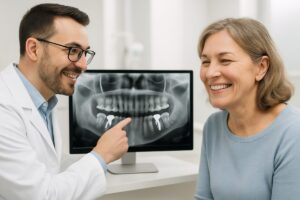
Modern implant care starts with a detailed exam and 3D imaging (CBCT). Digital scans and guided planning let clinicians assess bone volume, nerve position, and ideal implant placement before surgery. This planning improves safety and predictability for full-arch cases.
Surgical steps and recovery
Treatment may include extracting unsalvageable teeth, placing implants, and any needed bone grafting. Sedation options range from mild to deeper sedation for comfort. Initial healing usually takes a few months, though many protocols provide temporary teeth so patients are not without function during healing.
Restoration and final results
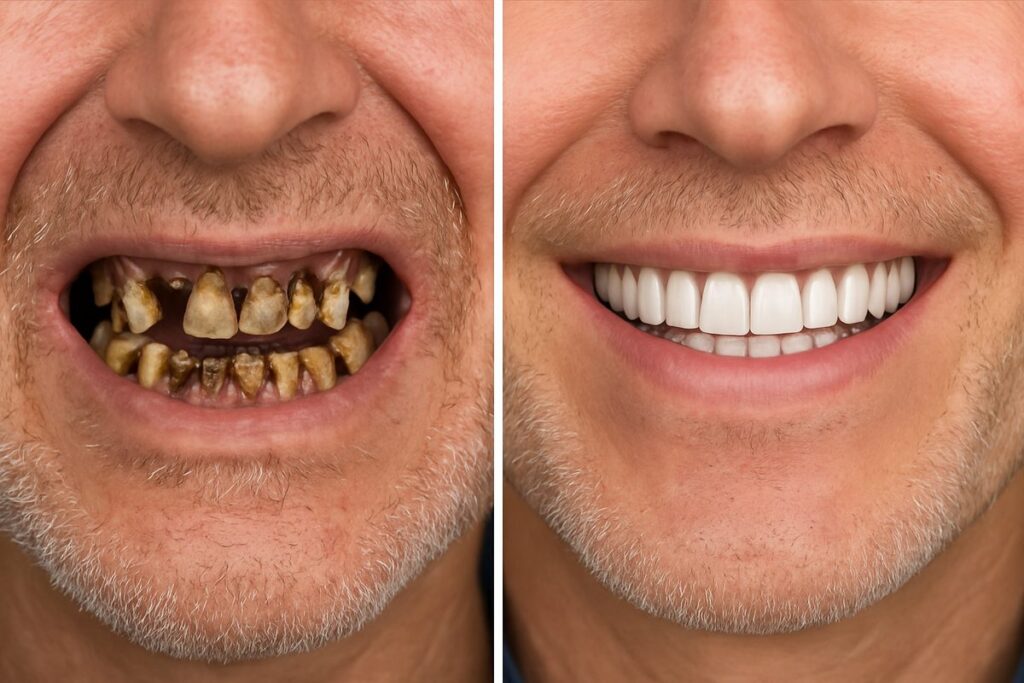
After implants integrate, final prostheses are delivered. Materials include acrylic, composite, or zirconia for full-arch restorations. Temporary teeth can be used immediately; final restorations offer improved esthetics, strength, and easier maintenance. Regular follow-up and good oral hygiene are essential for long-term success.
Who Is A Good Candidate For Implants When Facing Dental HAR?
Good candidates are generally in reasonable health, committed to oral hygiene, and have controlled medical conditions. Adequate bone or willingness to undergo grafting is important. Smoking cessation and realistic expectations about costs and timelines help predict favorable outcomes. Advanced techniques like S.M.A.R.T.™ bone grafting can expand candidacy by using minimally invasive grafts and faster healing.
Questions To Ask Your Implant Team About Dental HAR
- How many full-arch cases do you perform each year? - Do you use 3D imaging and computer-guided surgery? - Will my restorations be made in-house or outsourced? - What are your success rates and common complications? - What follow-up care, sedation options, financing, or warranties do you offer?
Why Choose A Specialist For Complex Dental HAR Cases
Complex full-arch cases benefit from combined surgical and prosthodontic expertise. A team approach—surgeon plus prosthodontist—improves planning, esthetics, and long-term function. Specialists trained in full-arch implant workflows and digital planning are more likely to deliver predictable results.
How Advanced Implant Dentistry & Oral Restoration approaches dental har cases
Advanced Implant Dentistry & Oral Restoration uses a fully digital workflow, computer-guided surgery, and an in-house lab to manage complex full-arch cases. With decades of combined experience, the team offers same-day provisional teeth, minimally invasive grafting techniques, and custom zirconia or hybrid restorations. This integrated approach keeps care coordinated and efficient while focusing on predictable, natural-looking outcomes.
Next steps for readers considering implants for dental har
If "dental har" describes your situation, gather recent X-rays, list medical history and medications, and schedule a consultation with an experienced implant team. Expect a thorough evaluation with 3D imaging and a clear plan that outlines options, timelines, costs, and expected outcomes. A careful assessment is the best first step toward restoring function and confidence with the right solution for your needs.