Titanium dental implants are metal posts placed into the jaw to replace missing teeth. They bond with bone (osseointegration) and support crowns or bridges. This article explains common and rare titanium dental implants side effects, what causes them, and when to seek care.
How Titanium Implants Work
Titanium is used because it bonds well with bone. Osseointegration creates a stable foundation for teeth. With good planning and care, modern implants have success rates above 90–95% over many years.
Common Short-Term Side Effects After Implant Surgery
Pain and swelling
Mild to moderate pain and swelling are normal for a few days after surgery. Use ice for the first 24 hours, take prescribed or OTC pain meds, eat soft foods, and rest. Symptoms should steadily improve.
Bruising and bleeding
Minor bleeding and facial bruising can occur in the first 24–72 hours. Bite on gauze to control bleeding. Heavy bleeding or worsening bleeding after 24 hours needs prompt evaluation.
Temporary numbness or altered sensation
Temporary nerve irritation can cause numbness or tingling near the implant site. If numbness persists beyond a few days, worsens, or affects large areas, contact your dentist right away.
Long-Term or Less Common Titanium Dental Implants Side Effects
Peri-implant mucositis and peri-implantitis
Mucositis is reversible inflammation of the gum tissue around an implant. If left untreated, peri-implantitis can lead to bone loss and threaten implant stability. Poor hygiene, smoking, and irregular checkups raise the risk.
Allergic or immune reactions to titanium
True titanium allergy is rare. Some patients report contact dermatitis or oral sensitivity. Patch testing or blood tests for metal hypersensitivity can help if symptoms persist without other explanation.
Bone loss and implant failure
Gradual bone loss can result from infection, excessive bite forces, or systemic conditions. Signs include increased mobility, pain, or changes in bite. Early detection improves the chance of saving the implant.
Systemic concerns and myths
Worries about titanium “toxicity” are common but, for most people, not supported by strong evidence. Patients with autoimmune issues or multiple metal sensitivities may need additional evaluation before placing implants.
Risk Factors That Increase Side Effects
Smoking, uncontrolled diabetes, poor oral hygiene, bruxism (teeth grinding), and severe bone loss increase complication risk. Optimizing health—quitting smoking, controlling blood sugar, and improving hygiene—reduces problems before surgery.
How Side Effects Are Diagnosed and Treated
Diagnosis
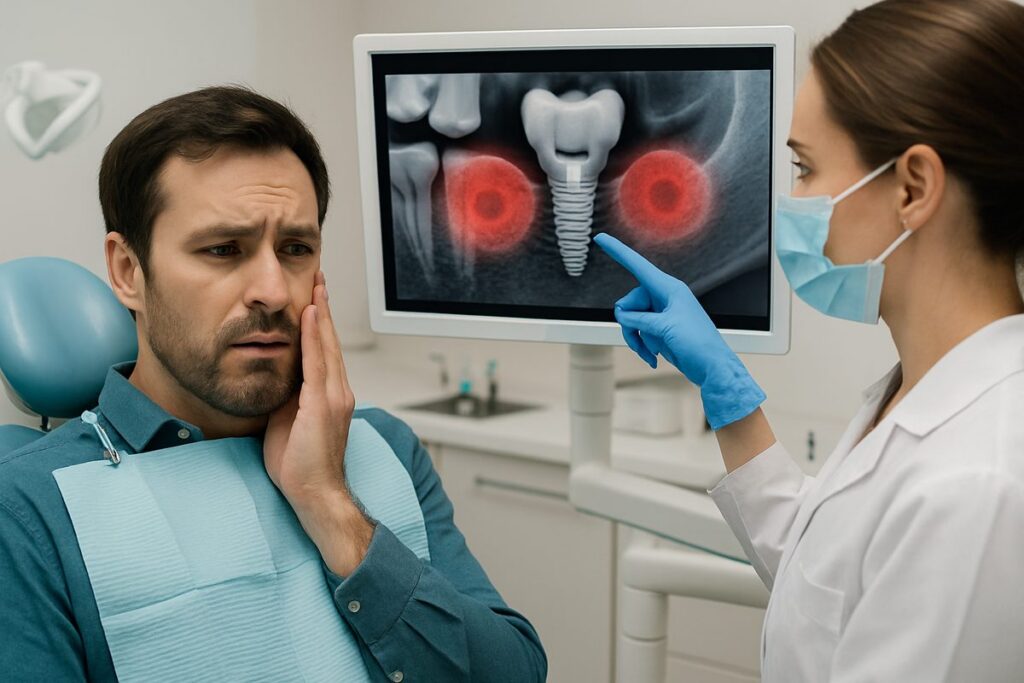
Dentists use clinical exams, dental X-rays or CBCT scans, and sometimes bacterial cultures or allergy testing to identify the cause of symptoms and plan treatment.
Treatment options
Mild issues often respond to improved cleaning, antibiotics, topical care, or laser therapy. More advanced problems may require surgical cleaning, bone grafting, or implant removal and replacement. Ongoing maintenance prevents recurrence.
When to Contact Your Dentist
Call your dentist if you have increasing pain after 72 hours, spreading swelling, fever, persistent numbness, a loose implant, or any pus or foul drainage. Early review speeds treatment and protects the implant.
About Advanced Implant Dentistry & Oral Restoration
Advanced Implant Dentistry & Oral Restoration uses CBCT imaging, computer-guided planning, and S.M.A.R.T.™ grafting to reduce complications and manage side effects. The team includes specialists with decades of implant experience and in-house digital lab support.
Conclusion & Next Steps
Most side effects are short-lived when implants are placed and properly cared for. Control risk factors, maintain good hygiene, and get early care for symptoms. If you suspect any "titanium dental implants side effects," schedule an evaluation to protect your health and your smile.