
Dental implementation refers to the complete process of planning, placing, and restoring dental implants to replace missing teeth. This post explains what patients should know about dental implant placement procedures: who is a good candidate, the step-by-step process, risks and aftercare, costs and timelines, and why specialist care improves outcomes. If you’re thinking about dental implants, this guide will help you understand each phase so you can ask the right questions at your consultation and feel confident about next steps.
What is dental implementation?
Dental implementation covers everything from the initial exam and 3D planning to placing the dental implant fixture, attaching the abutment, and fitting the final tooth crown or prosthesis. The dental implant fixture is the titanium (or zirconia) post placed in the jaw. The abutment connects the fixture to the tooth crown. Dental implant therapy can replace a single tooth, several teeth, or full arches using dental bridges or implant-supported dentures.
Who is a good candidate for dental implants?
Good candidates have adequate bone volume, healthy gums, and controlled chronic conditions. Smoking, uncontrolled diabetes, certain medications, and active gum disease can affect outcomes. Age alone is not a barrier, but lifestyle and oral hygiene matter. Some patients need preparatory treatments—bone grafts, sinus lifts, or extractions—to create a stable foundation for dental implants.
Step-by-step: the dental implant procedure process
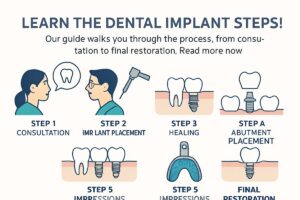
Consultation & digital planning
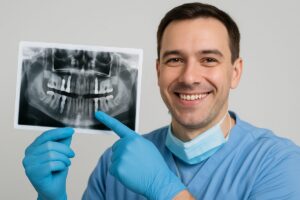
A thorough exam includes 3D cone beam CT imaging and intraoral scans to map bone, nerves, and tooth position. Digital planning creates a surgical guide so dental implants are placed precisely for best function and esthetics.
Surgery & dental implant placement
During placement, the surgeon positions the dental implant in the jaw. Local anesthesia and sedation options make the procedure comfortable. Guided surgery reduces surgical time and improves accuracy.
Healing & osseointegration
Osseointegration (bone fusing to the dental implant) usually takes several weeks to months. Temporary teeth or “teeth‑in‑a‑day” options may be available while you heal. If bone grafts are used, healing timelines can be longer.
Restoration: abutment and final tooth crown
After healing, an abutment is attached and impressions or digital scans are taken for the final tooth crown or prosthesis. Restorations are designed to match your bite and smile for long-term function and appearance.
Risks, recovery, and aftercare for dental implant placement
Short-term effects include swelling, bruising, and mild discomfort. Watch for signs of infection, persistent pain, or unusual mobility of the dental implant—contact your provider if these occur. Long-term care involves excellent oral hygiene, routine dental check-ups, and avoiding habits that stress dental implants. Proper maintenance and follow-up greatly increase dental implant longevity.
Costs, timeline, and financing for dental implants
Costs depend on the number of dental implants, need for grafting, materials used, lab work, and whether final restorations are zirconia or porcelain. Treatment can take months from start to finish; digital workflows and in-house labs can shorten visits and turnaround. Many practices offer payment plans, third-party financing, and phased treatment options to make care more affordable.
Why choose a specialized dental implant practice for dental implementation
A combined surgical and prosthodontic team improves predictability and esthetics. Advanced Implant Dentistry & Oral Restoration brings decades of dental implant experience, led by Dr. Michael Klein and Dr. Allon Waltuch. Their expertise in computer-guided surgery, prosthodontics, and full-arch restorations helps deliver reliable, natural-looking results with fewer visits.
Key technologies that improve outcomes
Cone beam CT, intraoral scanning (3Shape TRIOS®), computer-guided dental implant planning, in-house milling and 3D printing, S.M.A.R.T.™ bone grafting, PIEZOSURGERY®, PRGF healing protocols, and same-day teeth workflows all increase accuracy, reduce recovery time, and improve final restorations.
Get started with dental implementation
Bring a list of medical conditions, medications, and any dental records to your first consult. Expect imaging, a digital exam, and a clear treatment plan with timeline and costs. Contact us to schedule an evaluation to get a personalized plan and next steps for safe, effective dental implant placements.