
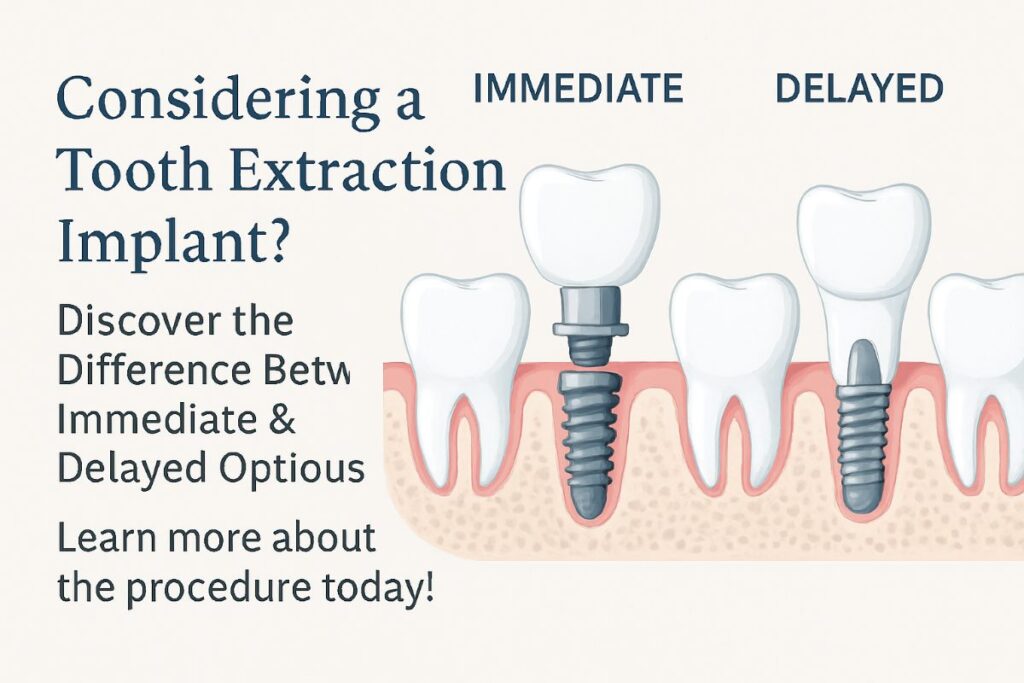
A tooth extraction implant combines removing a damaged tooth and replacing it with a dental implant to restore function and appearance. Many patients now get extractions and implants as part of one planned treatment, because modern techniques can make the process faster, safer, and more predictable. This post explains why a tooth extraction implant is often recommended, the difference between immediate and delayed placement, how dentists plan the procedure with digital tools, what to expect during surgery and recovery, who makes a good candidate, cost factors, and next steps for care.
Why a Tooth Extraction May Lead to an Implant
When a tooth is too decayed, fractured, or infected to save, extraction becomes necessary. Rather than leaving a gap or choosing a bridge or denture, many patients opt for a tooth extraction implant because implants replace the root and crown. That preserves bone, prevents neighboring teeth from shifting, and restores chewing and speech more naturally than removable options. For long-term health, implants are often the preferred solution.
Immediate vs. Delayed Tooth Extraction Implant Options
Immediate (same-day) implant after extraction
An immediate tooth extraction implant can be placed at the same visit as the extraction. Benefits include fewer surgeries, less time without a tooth, and preservation of the socket for better aesthetics. Immediate placement is best when there is good bone and no active infection. Not every case qualifies; careful planning determines if same-day treatment is safe and likely to succeed.
Delayed implant placement
Sometimes a delayed approach is safer. If the socket needs healing, or bone grafting is required to rebuild lost bone, the implant may be placed weeks to months later. Delayed placement allows infection to clear and grafts to integrate, increasing the chance of long-term success. Your dentist will recommend timing based on tissue health and treatment goals.
How Dentists Plan a Safe Tooth Extraction Implant
Diagnostics: 3D imaging and digital scans
Cone beam CT and intraoral scans give a 3D view of bone, roots, and nerves. These tools help the team decide whether a tooth extraction implant in New York or elsewhere can be done immediately and where the implant should sit for the best support and esthetics.
Computer-guided surgery and surgical guides
Computer-guided planning converts scans into a precise surgical guide. Guided implant placement controls angle and depth, reducing risk to nerves and improving final restorations. This technology increases predictability for both immediate and delayed cases.
What to Expect During the Tooth Extraction Implant Procedure
Typical steps include removing the tooth gently, cleaning and preparing the socket, placing bone graft material if needed, and inserting the implant. If immediate, a temporary crown or bridge may be attached to restore appearance. Procedures are done with local anesthesia and often sedation for comfort.
Recovery, Risks, and Long-Term Care After a Tooth Extraction Implant
Expect swelling and mild discomfort for a few days, managed with medication and ice. Watch for excessive pain, fever, or unusual drainage, which need prompt attention. Long-term care includes good oral hygiene, quitting smoking, and regular dental checkups to ensure the implant remains healthy.
Who Is a Good Candidate for a Tooth Extraction Implant?
Good candidates are in overall healthy condition, have sufficient bone or are willing to undergo grafting, and do not have uncontrolled gum disease or systemic issues that impair healing. Smokers and those with certain medical conditions may need special planning or therapies like PRGF to improve outcomes.
Cost, Insurance, and Financing for a Tooth Extraction Implant
Costs vary by extraction complexity, need for grafting, implant type, and the final prosthetic. Insurance coverage is limited, but many practices offer financing or payment plans to spread cost and make treatment accessible.
Why Choose Advanced Implant Dentistry & Oral Restoration for Tooth Extraction Implant
Advanced Implant Dentistry & Oral Restoration brings three decades of implant experience, computer-guided surgery, an in-house lab, and same-day teeth capabilities. These tools and skills make tooth extraction implant treatment more predictable, efficient, and comfortable.
Next Steps: Is a Tooth Extraction Implant Right for You?
If you’re considering a tooth extraction implant in New York, schedule a consultation or virtual exam to review scans and design a personalized plan. A digital evaluation will clarify timing, costs, and the best path to restore your smile.