
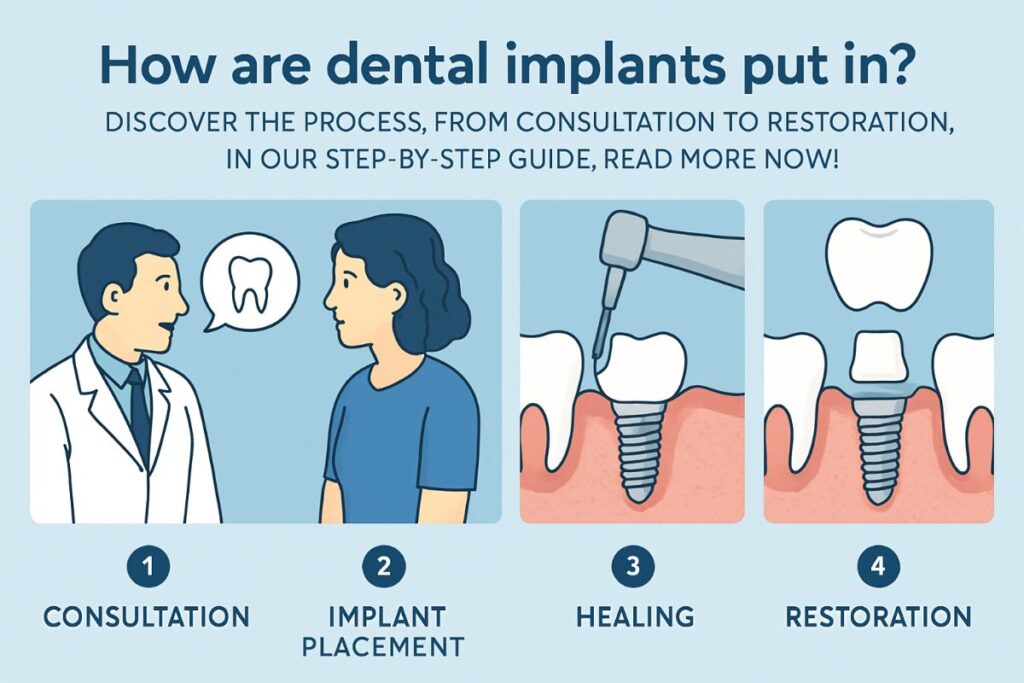
How are dental implants put in? In plain terms: a dentist replaces a missing tooth by placing a titanium post into the jaw, letting the bone heal around that post, and then attaching a natural-looking crown. This step-by-step guide explains the process, what to expect, and practical next steps so you can decide if implants are right for you.
Step 1: Initial Consultation and Digital Exam
Your first visit reviews medical and dental history, current medications, and your goals. The dentist examines your mouth and discusses tooth replacement options. Most implant plans begin with a digital exam and 3D imaging to check bone quality and nearby nerves.
Step 2: 3D Imaging & Treatment Planning
A Cone Beam CT and digital intraoral scans map your teeth, bone, and vital anatomy. This data lets the team plan the exact position, angle, and depth of each implant. When people ask "how are dental implants put in," computer-guided planning answers that question with more predictability and safety.
Step 3: Pre-Surgical Preparations
Before surgery you’ll complete health checks and confirm medications. If a damaged tooth must come out, extraction may be done first or at the same appointment. Bone grafting is recommended when bone is too thin or short to hold an implant securely.
Step 4: Anesthesia & Comfort Options
Most implant surgeries use local anesthesia so the area is numb. For anxiety or longer cases, oral sedation or IV sedation are common. You may feel pressure during drilling but not sharp pain. Recovery from sedation is discussed before treatment.
Step 5: Implant Placement Surgery
Guided vs. Freehand Placement
Surgical guides made from your 3D plan control angle and depth. Guided surgery reduces guesswork and improves accuracy. Freehand placement is used in skilled hands but depends more on the surgeon’s experience.
Placing the Implant
The surgeon uses a controlled drilling sequence to prepare the bone, then inserts the titanium post. A healing cap or temporary tooth is placed to shape the gum and protect the site while the bone heals.
Step 6: Bone Grafting & Soft Tissue Care (if needed)
When bone is lacking, techniques like S.M.A.R.T.™ bone grafting or PRGF (plasma-rich growth factors) support bone growth and speed healing. Soft tissue lasers and careful suturing help gums heal cleanly around the implant.
Step 7: Healing & Osseointegration
Osseointegration is when bone grows tightly around the implant. This usually takes several months. Regular follow-up visits check healing and ensure the implant is stable before moving to the final restoration.
Step 8: Abutment & Final Restoration
After healing, an abutment connects the implant to the crown. Crowns or bridges can be zirconia or porcelain for a natural look. An in-house lab and digital workflow let some practices provide final restorations faster and with tighter quality control.
Aftercare, Recovery Tips, And What To Expect
- Take prescribed pain meds and use cold packs first 48 hours.
- Keep the area clean—gentle rinses and soft brushing as directed.
- Eat soft foods while the site heals; avoid hard or sticky foods.
- Watch for swelling, prolonged bleeding, increasing pain, or fever—contact your dentist if these occur.
- Maintain routine dental visits and oral hygiene to protect long-term success.
Risks, Success Rates, And When To See A Specialist
Common risks include infection, failed integration, and damage to nearby structures. Success factors include good overall health, adequate bone, and quitting smoking. See a specialist if you have persistent pain, loosening of the implant, or signs of infection.
Why Choose Experts For Complex Cases
Complex situations benefit from a team with advanced tools and experience. Advanced Implant Dentistry & Oral Restoration uses guided surgery, an in-house lab, and Teeth-in-a-Day protocols to answer "how are dental implants put in" with precision and faster results. Their team blends surgical skill with prosthetic planning to handle difficult cases more predictably.
Next Steps & How To Learn More
If you’re ready to learn more, schedule a consultation or request a digital treatment plan. A skilled implant team will review your 3D scan, explain options, and give a clear timeline so you know exactly how dental implants are put in and what to expect next.