
Periodontal implants can be a powerful option for saving teeth that are failing from gum disease or long-term root loss. This article explains what periodontal dental implants are, how dental implants can stabilize or replace support for loose teeth, who makes a good candidate, the step-by-step process, recovery and risks, cost basics, and how to get a personalized 3D treatment plan. By the end you should have a clear sense of whether periodontal dental implants might help preserve your smile.
What are periodontal implants?
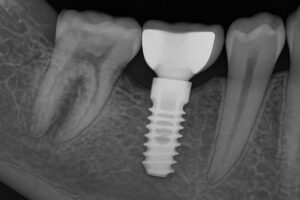
Periodontal dental implants are dental implants used near or instead of failing teeth affected by periodontal (gum) disease. Unlike standard dental implants placed to replace a fully missing tooth, periodontal dental implants may be used to support weak roots, connect failing teeth to a stable dental implant-restoration, or replace teeth where gum disease removed bone and support. They work alongside periodontal treatments rather than replacing them.
How periodontal dental implants can save teeth
Stabilizing loose teeth
When loose teeth become mobile from bone loss or damaged support, dental implants or implant-assisted restorations can anchor a loose tooth or group of teeth. This reduces movement, lowers chewing force on compromised roots, and can stop further trauma that makes gum disease worse.
Replacing lost support and preserving bone
If periodontal disease has destroyed bone around a root, a dental implant can replace that lost root support. Dental implants help preserve jawbone volume because the dental implant transmits chewing forces into bone, slowing bone shrinkage and maintaining facial structure and function.
Who is a good candidate for periodontal implants?
Good candidates typically have controlled gum disease, enough bone for a dental implant or are willing to have grafting, are non-smokers or willing to quit, have reasonable overall health, and realistic expectations about maintenance. Active, untreated periodontal infection must be managed first. A thorough exam determines candidacy.
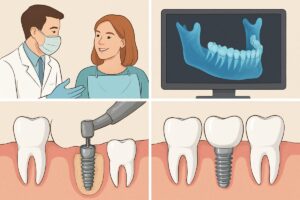
The periodontal dental implant process — step by step
Initial exam and 3D imaging
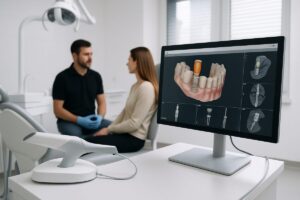
Your clinician will do periodontal charting and a CBCT 3D scan to map bone and roots. Digital scans and treatment planning show where dental implants can best support teeth and what grafting might be needed.
Surgery, grafting, and restoration
If bone is insufficient, a graft (often using S.M.A.R.T.™ or similar techniques) may be placed. Dental implants are then surgically positioned, allowed to heal, and later attached to tooth crowns, dental bridges, or splints that stabilize teeth. Some practices offer guided surgery and immediate provisional restorations when appropriate.
Recovery, care, and long-term success
Expect mild swelling and discomfort in the first week, healing over months, and routine follow-ups. Long-term success depends on excellent home hygiene, regular periodontal maintenance cleanings, and avoiding tobacco. Professional monitoring catches issues early.
Risks, limits, and alternatives to periodontal dental implants
Complications can include infection, dental implant failure, or need for additional grafting. Dental implants may not be recommended for uncontrolled gum disease, heavy smokers, or those with certain medical conditions. Alternatives include dental bridges, removable partial dentures, or focused periodontal therapy to try to save natural teeth.
Cost and insurance basics for periodontal dental implants
Costs vary with grafting, number of dental implants, and restorations. Insurance often limits coverage for dental implants; many patients use dental financing, payment plans, or health loans. A detailed estimate follows evaluation and 3D planning.
Why choose Advanced Implant Dentistry & Oral Restoration for periodontal implants
Dr. Michael Klein and Dr. Allon Waltuch bring decades of dental implant and prosthodontic expertise. The practice uses CBCT imaging, 3Shape digital scans, guided dental implant surgery, S.M.A.R.T.™ grafting, PRGF, and an in-house lab for precise, faster results. Their digital workflow and Teeth‑in‑a‑Day options improve predictability and comfort for complex periodontal implant cases.
Concerned About Loose Teeth? Schedule a Periodontal Dental Implant Consultation
If you’re concerned about loose or failing teeth, contact us to schedule a consultation for a personalized exam and 3D treatment plan to see if periodontal implants are right for you. A targeted evaluation will clarify options and costs and outline the safest path to save your teeth or restore your bite.