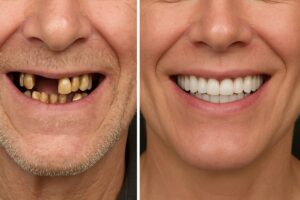

Oral surgery and dental implants refer to surgical procedures that place a titanium post into the jaw to replace a missing tooth root and the dental restorations that sit on top of that post. Patients choose dental implants to replace missing or failing teeth, restore chewing and speech, and improve the look of their smile. These treatments aim to give long-term function and natural appearance when other options like bridges or dentures aren’t ideal.
What Are Oral Surgery and Dental Implants?
Oral surgery covers procedures performed in the mouth, including extractions, bone grafts, and implant placement. Dental implants are small titanium posts placed into the jawbone that act like tooth roots. The process has two parts: the surgical placement of the implant and the restorative phase where a crown, bridge, or denture is attached. Together, they replace lost teeth in a stable, long-lasting way.
Who Is a Good Candidate for Oral Surgery and Dental Implants?
Common reasons patients seek implants
People lose teeth from decay, trauma, or teeth that can’t be saved. Implants are used to replace single teeth, several missing teeth, or entire tooth arches. Many patients choose implants to restore eating comfort, speech clarity, and facial support that can be lost with missing teeth.
Health and bone considerations
Good candidates are generally healthy and free of uncontrolled medical conditions. Diabetes should be well-managed, and smoking raises risks and can affect healing. Adequate jawbone is needed to anchor implants; if bone is thin or missing, bone grafting can rebuild volume so implants can be placed safely. In cases of significant bone loss, specialized techniques ensure successful implant integration.
How We Plan Oral Surgery and Dental Implants
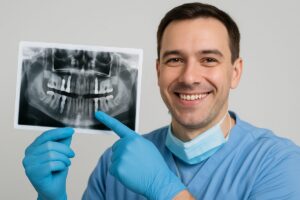
Planning starts with a clinical exam and digital scans. 3D imaging shows bone size, nerve locations, and tooth positions. A detailed plan maps where each implant will go and whether grafting or extractions are needed. Precise planning lowers complications and improves predictable results for both surgery and the final restorations.
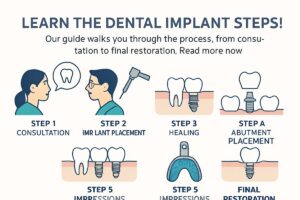
The Oral Surgery and Implant Procedure: Step by Step
Consultation and preparation
Your first visit reviews health history, X-rays, and treatment goals. Staff will give pre-op instructions about medications, eating, and arrival times. Sedation options are discussed so you’re comfortable during surgery.
Surgery basics
If needed, a damaged tooth is removed. Bone grafts may be placed to build support. The implant post is placed into the bone, often using a 3D-printed guide to ensure exact position and angle. Guided surgery helps reduce surgical time and improves accuracy.
Restoration phase
After placement, implants need time to fuse with bone—typically a few months. Temporary teeth can be used while healing occurs. Once healed, an abutment and final crown, bridge, or denture are made and attached for natural function and appearance.
Recovery, Risks, and Expected Outcomes
Recovery usually involves mild to moderate soreness for a few days, managed with pain meds and ice. Follow-up visits check healing and remove stitches if needed. Risks include infection, nerve injury, or implant failure, but careful planning and follow-up reduce these. Long-term success is measured by comfort, chewing ability, and stable bone around the implant.
Restoration Options: From Single Implants to Full-Arch Solutions
Single-tooth crowns replace one missing tooth. Implant-supported bridges span multiple missing teeth without affecting nearby teeth. Full-arch options like All-on-4 or Teeth-in-a-Day replace a full mouth and can give immediate function. Each option has trade-offs in cost, treatment time, and maintenance; your team will help choose the best fit.
Cost, Insurance, and Preparing for Treatment
Cost varies with the number of implants, grafting needs, materials, and imaging. Dental insurance sometimes covers part of the restorative work but often not the entire implant. Many practices offer financing and payment plans. Prepare by arranging time off, following pre-op instructions, and planning for post-op care.
Why Choose Advanced Implant Dentistry & Oral Restoration for Oral Surgery and Dental Implants
Advanced Implant Dentistry & Oral Restoration brings decades of implant experience and a fully digital, in-house workflow. The team combines prosthodontic training and advanced surgical skills with guided surgery, same-day teeth options, and minimally invasive grafting to improve comfort and predictability. Their in-house lab and modern imaging keep care efficient and coordinated.
Next Steps: How to Learn More or Schedule a Consultation
Bring recent X-rays, a list of medications, and questions about recovery and costs to your consult. Ask about experience, technology used, and financing. Contact the practice to schedule a consult and get a personalized plan for oral surgery and dental implants.