If you are missing most or all of your teeth, understanding your full teeth replacement options can help you regain function, comfort, and confidence. This guide covers the common choices, how to pick the right one, what the treatment journey looks like, costs and care, and how to find an experienced team to restore your smile.
Overview of Full Teeth Replacement Options
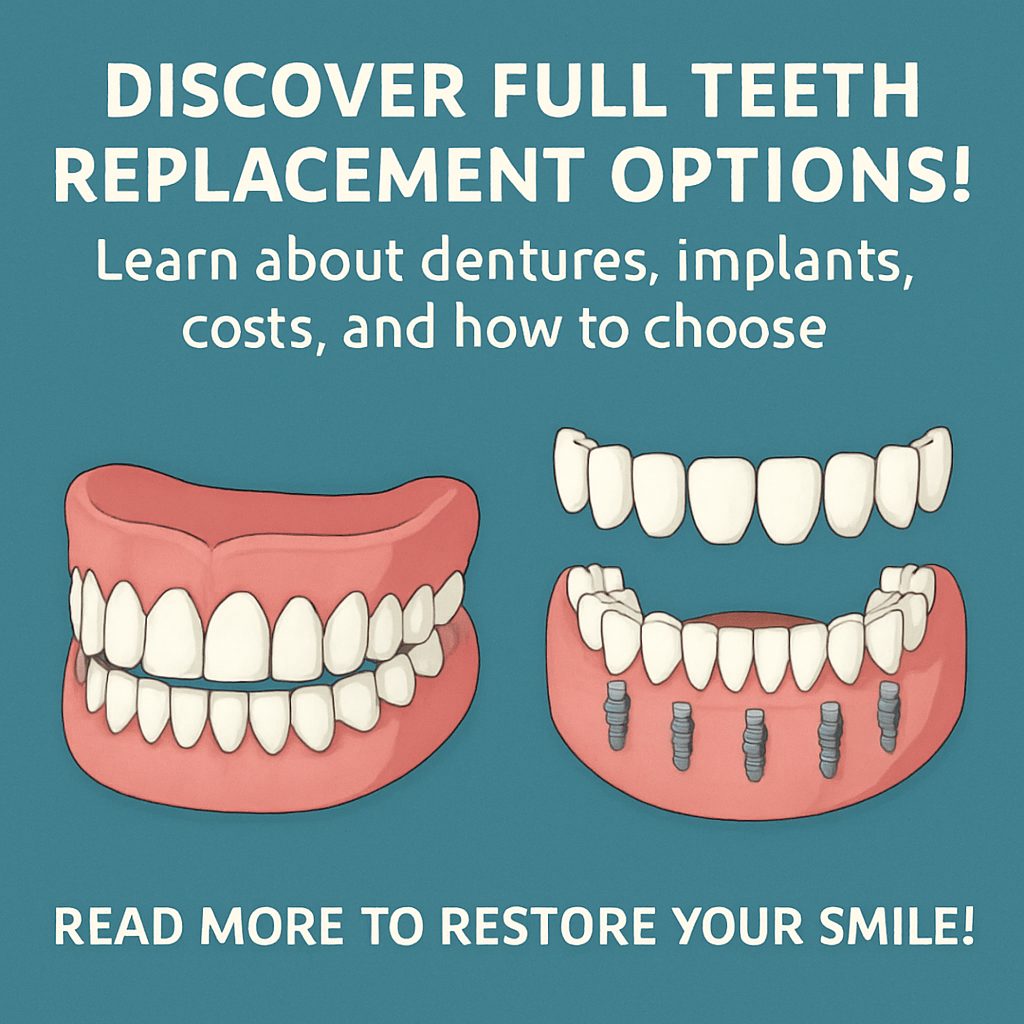
Removable Full Dentures
Removable dentures sit on the gums and can replace a full arch. They are usually the lowest-cost option and require no surgery. Downsides include shifting, less chewing power, and long-term bone shrinkage under the denture.
Implant-Supported Overdentures
Overdentures attach to two or more implants for better stability. They reduce slipping and improve chewing versus removable dentures. They still come off for cleaning and may need periodic relines.
Fixed Full-Arch Implant Restorations (All-on-4 / All-on-6)
Fixed full-arch restorations are held by multiple implants and stay in the mouth like natural teeth. They offer strong function and a permanent feel. Some patients qualify for immediate teeth the same day as surgery.
Implant-Retained Bridges & Hybrid Prostheses
These bridge options sit between single-tooth implants and full-arch restorations. They use several implants to support a durable prosthesis and often combine acrylic and zirconia for strength and esthetics.
How to Choose the Best Option
Oral and Bone Health
Bone volume, gum condition, and infection history guide what is possible. Low bone may need grafting before implants, which affects timing and costs.
Medical History & Lifestyle
Smoking, diabetes, certain medications, and overall health influence healing and implant success. Lifestyle needs—like strong chewing or frequent travel—also matter.
Function, Aesthetics, and Expectations
Decide how important chewing power and a natural look are to you. Fixed implants offer the best function, while removable options are easier to change and repair.
Budget, Insurance & Timeline
Costs vary widely: removable dentures are least expensive up front; implants cost more but last longer. Insurance may cover part of treatment; financing can spread payments. Consider short-term cost versus long-term value.
What to Expect During Treatment
Consultation and Digital Planning
A consultation typically includes 3D imaging and digital scans to map bone, nerves, and ideal implant positions. This planning improves safety and predictability.
Surgery, Grafting, and Temporary Teeth
Surgery can include implant placement and, if needed, bone grafts. Many practices offer temporary teeth so you leave with function while healing occurs.
Final Prosthesis and Aftercare
After healing, your final restoration is fitted. Expect follow-up visits, routine hygiene care, and occasional adjustments to keep function and fit optimal.
Comparing Pros and Cons: Durability, Cost, and Care
Removable dentures cost less but require more daily removal and risk bone loss. Implant-supported options cost more up front but offer better chewing, comfort, and longevity. Fixed full-arch restorations provide the closest solution to natural teeth but need surgical placement and higher initial investment.
Financing & Practical Considerations
Many offices offer dental financing, third-party lenders, or in-house plans. Dental insurance may cover parts of treatment but rarely pays for full implant restorations. When comparing full teeth replacement options, ask for a detailed quote, payment options, and a breakdown of staged costs.
Finding the Right Team
Look for a team with implant and restorative expertise, CBCT 3D imaging, guided surgery, and an in-house lab for faster, precise results. Check credentials, before-and-after cases, and patient reviews.
Advanced Implant Dentistry & Oral Restoration is a New York practice with decades of implant and prosthodontic experience. Their team includes prosthodontic and implant specialists, computer-guided surgery, a digital workflow, and an in-house lab for coordinated full-arch care.
Bring a list of medications, medical and dental history, and any recent X-rays if available. Prepare questions about options, timelines, costs, and expected outcomes so you can compare full teeth replacement options and choose the plan that fits your needs. Contact us to learn more.