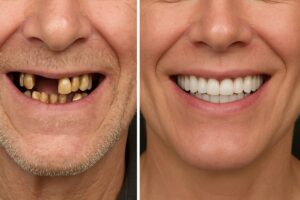
If you’re asking, "Can you replace all your teeth with implants?" the short answer is usually yes — many people can get a full set of implant teeth. Replacement depends on your overall health, the bone in your jaw, and the treatment type you choose. This post explains who is a good candidate, the main full‑mouth implant options, what the treatment looks like, risks and care, cost basics, and how Advanced Implant Dentistry & Oral Restoration can help you decide.
Who can get all their teeth replaced with implants?
General health and medical factors
Good general health makes implant treatment safer and more predictable. Conditions like uncontrolled diabetes, heavy smoking, certain autoimmune diseases, or medications that affect bone healing can complicate or delay implants. Your dentist will review your medical history and may work with your physician to optimize health before surgery.
Oral health and bone requirements
You need enough jawbone to hold implants. Long‑term tooth loss, Healthy gums and control of infections are essential; sometimes extractions, cleaning, or S.M.A.R.T.™ grafting are done first to prepare the mouth.
Common full-mouth implant options
All‑on‑4 and All‑on‑6 fixed‑arch solutions
All‑on‑4 and All‑on‑6 use four or six implants to support a full fixed bridge. They suit patients who want non‑removable teeth and a faster recovery with fewer implants. Benefits include stable chewing, simplified cleaning, and, in many cases, same-day temporary teeth.
Implant‑supported overdentures
Overdentures snap onto two to four implants and are removable. They cost less up front and make hygiene easier because you can take them out to clean. They’re a good option for patients who want lower cost or simpler maintenance but don’t need a fixed solution.
Full‑arch implant bridges
A full‑arch bridge is a custom prosthesis attached to multiple implants. Unlike single‑tooth implants, this restores the whole arch at once with a lab‑made bridge that matches function and appearance. It’s often used when many teeth are missing or must be removed.
What to expect during treatment
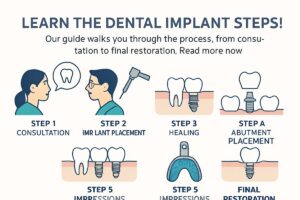
Consultation and planning
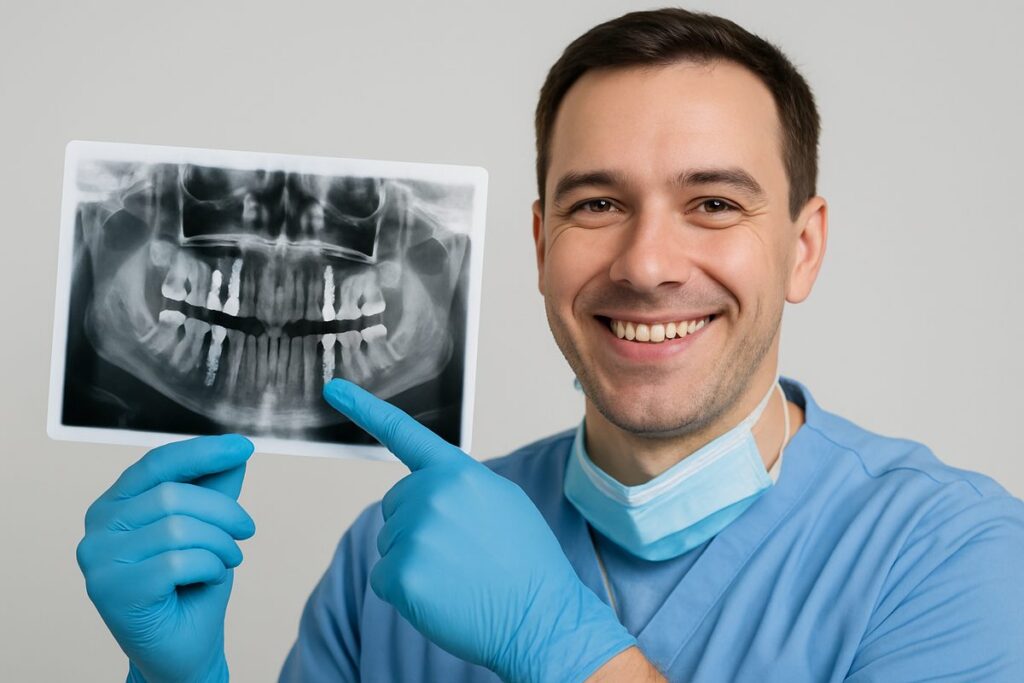
Expect a comprehensive exam with CBCT scans and digital impressions to map bone and nerve anatomy. Detailed planning ensures implant positions, prosthesis design, and timelines are clear. Ask about the proposed number of implants, grafting needs, and whether you’ll get temporary teeth.
Surgery and same‑day teeth
Surgery is often guided with 3D‑printed guides for precise placement. Many practices offer same‑day temporary teeth, so you leave with a functioning smile. Sometimes implants are loaded immediately; other times they’re staged to let bone heal first.
Healing and final restorations
Osseointegration takes a few months. You’ll have follow‑ups to check healing and fit. Once stable, the final crowns or bridge are delivered, polished, and adjusted for comfort and bite.
Risks, recovery, and long‑term care
Short‑term risks include swelling, pain, infection, and rare nerve issues. Pain is managed with medication and care instructions. Long‑term success needs daily brushing, flossing, or interdental cleaning, and regular dental visits. With good care, implants can last decades, but restorations may need repair or replacement over time.
Cost factors and financing basics
Price varies by number of implants, grafts, implant materials, lab work, and anesthesia. Full‑arch fixed solutions cost more than overdentures. Many practices offer financing, third‑party lenders, and payment plans; dental insurance often covers only part of the restorative work. Ask for an itemized estimate and financing options at your consultation.
Why choose Advanced Implant Dentistry & Oral Restoration
Advanced Implant Dentistry brings three decades of implant expertise with Dr. Michael Klein and Dr. Allon Waltuch. Their in‑house lab, digital guided surgery, and S.M.A.R.T.™ grafting let them plan precise, minimally invasive care and offer same‑day teeth when appropriate.
Next steps: Is full‑arch implant treatment right for you?
Bring your medical history, a list of medications, photos of your smile (if possible), and questions about timelines and costs. Schedule an evaluation to get personalized recommendations and a clear plan for replacing all your teeth with implants. Contact the office to book a consultation and learn which full‑arch option fits your needs.