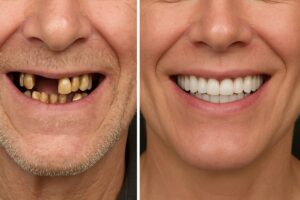
Missing teeth can feel overwhelming. This guide explains the four types of dental implants in plain language to help you choose the option that fits your needs, timeline, and budget. Read on for clear steps, what to expect, and how modern planning finds the best solution for your smile. We’ll cover what implants are, the four main types of dental implants, how decisions are made, treatment steps, risks, and how Advanced Implant Dentistry & Oral Restoration approaches care with digital tools and same-day options.
Quick primer: What is a dental implant?
A dental implant is a small metal post placed in the jawbone to serve as a tooth root. Once healed, it holds a crown, bridge, or denture. Implants are a long-term solution for replacing missing teeth because they fuse with bone and feel like natural teeth.
The four types of dental implants
Endosteal (root-form) implants
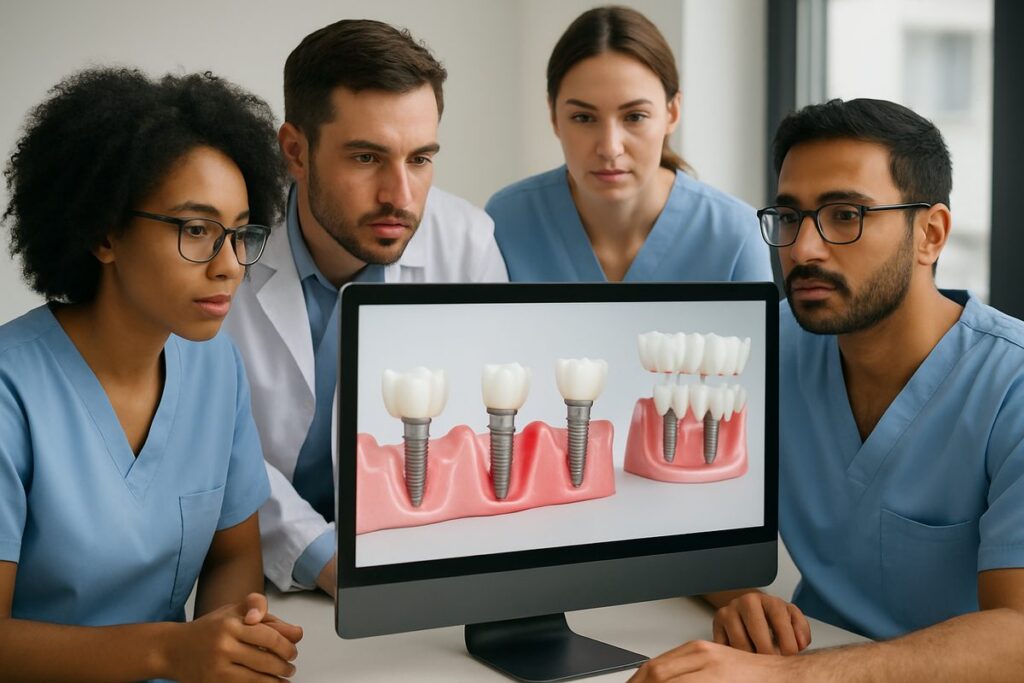
Endosteal implants are the most common. They look like tiny screws made of titanium and are placed directly into the jawbone. They suit people with enough healthy bones. Benefits include high success rates and natural function. Typical timeline: place implant, heal for 3–6 months, then attach final crown.
Subperiosteal implants
Subperiosteal implants sit on the jawbone, under the gum tissue, rather than inside the bone. They are used when bone height is too low for endosteal implants, and grafting is not desired. Pros: avoids major bone grafting. Cons: less common and may not last as long as root-form implants.
Zygomatic implants
Zygomatic implants anchor into the cheekbone (zygoma) and are for severe upper jaw bone loss. They require more complex surgery and are done by experienced teams. Recovery can be longer, but they can avoid repeated bone grafts and allow fixed teeth for patients who otherwise could not get implants.
All‑on‑4 / full‑arch implant restorations
All‑on‑4 is a full-arch solution using four or more strategically angled implants to support a fixed bridge. It often allows immediate treatment of teeth on the same day. Best for those missing most or all upper or lower teeth who want a fast, stable result. Maintenance includes routine cleanings and occasional prosthetic checks.
How do we choose which of the four types of dental implants is right for you?
Choice depends on the amount and quality of bone, the number of missing teeth, overall health, aesthetic goals, budget, and timeline. Diagnostics, such as CBCT scans and digital impressions, reveal bone shape and nerve anatomy and guide planning. A dentist will review your medical history and goals to recommend the safest, most predictable option.
Treatment steps and what to expect
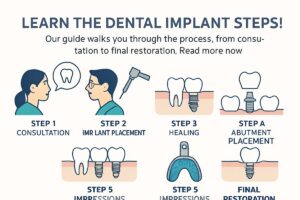
Most plans start with 3D imaging and digital planning. Guided surgery helps place implants precisely. If needed, bone grafting or soft tissue work may come first. Patients may receive temporary teeth the same day or after healing. Final restorations are fitted once implants are stable. Expect swelling and mild discomfort for a few days, with regular follow-up visits.
Risks, success rates, and long‑term care
Common risks include infection, implant failure, nerve irritation, or sinus issues with upper implants. Success rates for standard endosteal implants are high (often 95%+), while success rates for more complex types vary by case. Long-term care means good oral hygiene, quitting smoking if possible, and regular dental checkups to protect your implant investment.
Why consider Advanced Implant Dentistry & Oral Restoration
Advanced Implant Dentistry & Oral Restoration brings decades of implant experience, computer-guided planning, an in‑house lab, and same‑day options. Their team uses CBCT imaging, guided surgery, and digital workflows to plan predictable single-tooth and full-arch solutions using less-invasive techniques.
Next steps / Call to action
Schedule a consultation to review your goals and imaging. Bring your medical history and a list of concerns. Using CBCT and guided planning, the team will explain which of the four types of dental implants best fits your needs and outline a clear, step-by-step plan.